Key Points:
- India halts Russian oil imports, Trump says Modi vowed to stop Russian crude purchases.
- Oil prices rose 1% on supply concerns.
- Analysts expect tighter global markets.
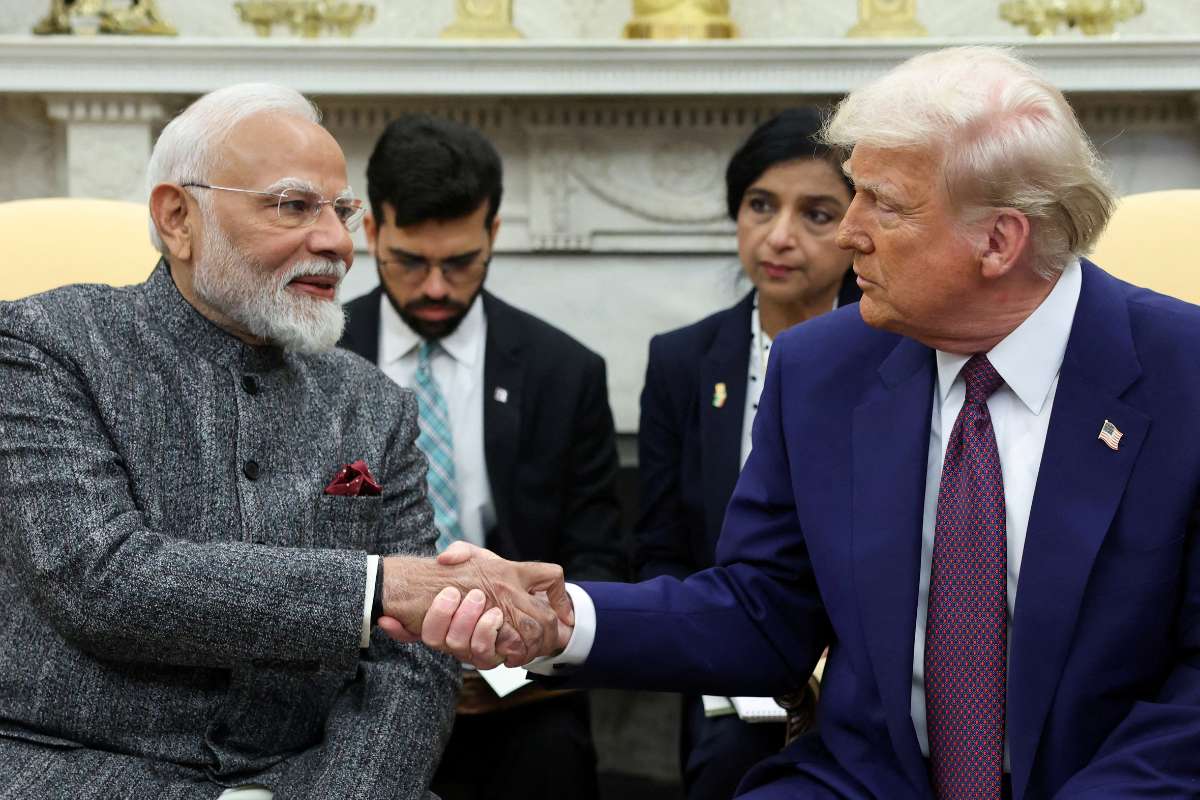
Oil prices rose about 1% on Thursday after U.S. President Donald Trump said Indian Prime Minister Narendra Modi had pledged that India halts Russian oil imports. The statement raised expectations of a tighter global supply as Washington continues efforts to limit Moscow’s energy revenues.
Brent crude futures increased 56 cents, or 0.9%, to $62.47 a barrel by 0655 GMT, while U.S. West Texas Intermediate (WTI) gained 58 cents, or 1%, to $58.85. Both benchmarks had fallen earlier in the week to their lowest levels since early May, weighed by concerns over weak demand and rising output from OPEC+ and other producers.
India focuses on energy security
Trump said on Wednesday that India, which sources roughly one-third of its oil from Russia, would halt future purchases. He added that Washington would next engage China on similar measures to restrict Russian energy trade as part of its broader strategy to pressure Moscow into peace negotiations over Ukraine. This development is being viewed as a major step, signaling India halts Russian oil imports, though official confirmation from India is pending.
India’s foreign ministry responded Thursday, emphasizing that the country’s priorities remain stable energy prices and secure supply. The statement did not mention Trump’s remarks or confirm any commitment that India halts Russian oil imports completely.
Three sources familiar with the matter said some Indian refiners were preparing to gradually reduce imports of Russian crude, though the scale and timeline of such reductions remain unclear.
U.S. urges allies to cut imports
U.S. Treasury Secretary Scott Bessent said he informed Japanese Finance Minister Katsunobu Kato that Washington expects Japan to stop importing Russian energy. India and China currently account for the largest share of Russia’s seaborne crude exports, which have been sanctioned by the United States and the European Union since the start of the Ukraine conflict.
For months, India has defended its continued imports as essential to its energy security and economic stability. Analysts said even a partial cutback from India could have a measurable impact on global oil flows.
“At the margin, this is a positive development for the crude oil price as it would remove a big buyer of Russian oil,” said Tony Sycamore, a market analyst at IG.
The United Kingdom also announced new sanctions on Wednesday targeting major Russian energy companies, including Rosneft and Lukoil. The measures extend to four oil terminals, 44 tankers in Russia’s “shadow fleet,” and Nayara Energy Limited, a Russian-owned refinery in India.
Meanwhile, China expanded its rare earth export controls on Thursday, ahead of an expected meeting between Presidents Trump and Xi Jinping.
Market watches inventory data
Later in the day, traders were awaiting weekly U.S. inventory figures from the Energy Information Administration (EIA) following mixed signals from the American Petroleum Institute (API). According to API data, U.S. crude stocks rose by 7.36 million barrels in the week ending Oct. 10, while gasoline inventories increased by 2.99 million barrels. Distillate inventories, however, fell by 4.79 million barrels.
The data suggest uneven demand trends in the world’s largest oil-consuming nation. Rising crude and gasoline stocks point to weaker consumption, while declining distillate levels indicate stronger diesel use. Analysts expect EIA data to show a smaller build of about 0.3 million barrels.
As investors assess potential supply cuts from India and Japan alongside mixed U.S. demand indicators, oil markets remain volatile. Prices are likely to hinge on policy responses from key importers and the pace of diplomatic developments between Washington, Moscow, and Beijing as India halts Russian oil imports and gains global attention.
Visit more of our news! Oil Gas Energy Magazine