
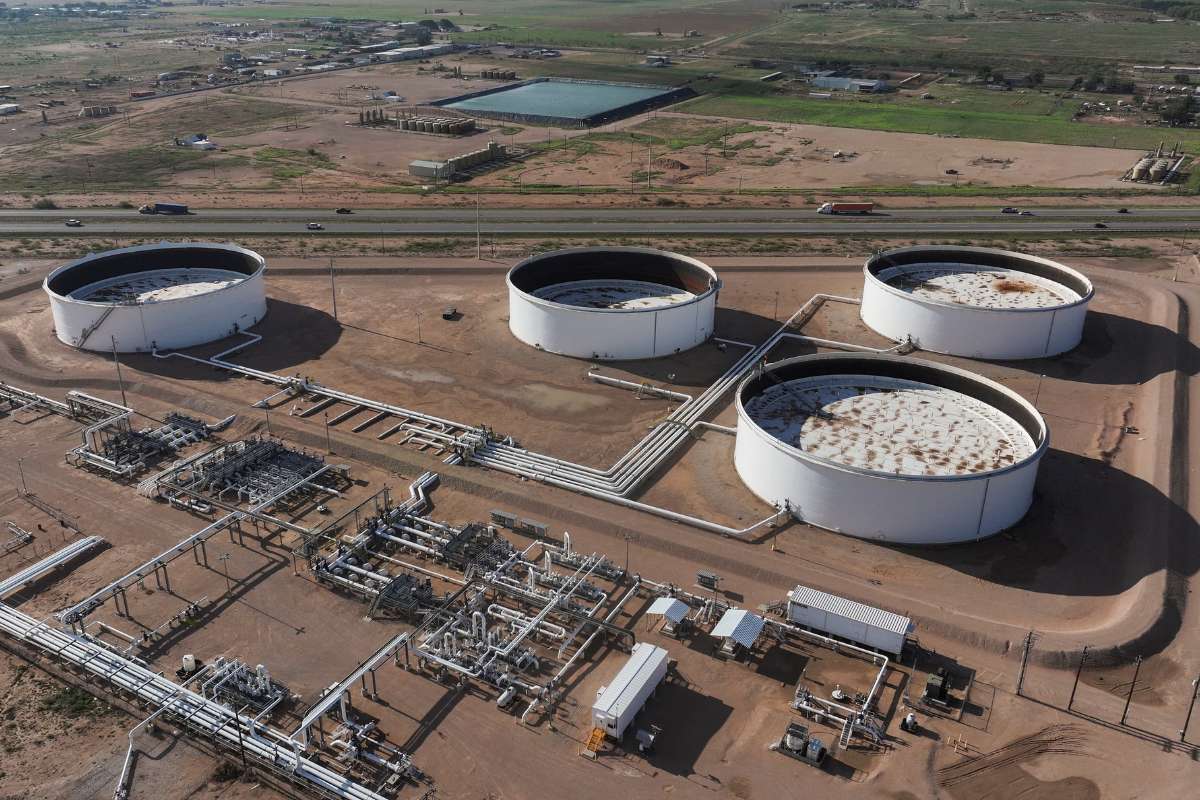
Commercial stockpiles fall by 9.3 million barrels as gasoline supplies also shrink. Crude oil inventories in the United States fell sharply during the week ending September 12, with government data showing a 9.3 million-barrel decline. The figures, released by the U.S. Energy Information Administration (EIA), brings commercial stockpiles to 415.4 million barrels, 5% below the five-year seasonal average. The drop follows a 3.9 million-barrel increase reported the week prior and marks one of the steepest weekly draws in recent years.
The sharp decline in inventories is drawing attention across global markets, as it highlights tightening supply conditions at a time when energy demand remains sensitive to broader economic shifts. The EIA data also largely confirmed expectations after preliminary figures from the American Petroleum Institute (API) earlier suggested a 3.42 million-barrel draw.
Crude and fuel prices react cautiously
Despite the steep drop, crude oil prices remained muted in the immediate aftermath of the announcement. By mid-morning trade on Wednesday in New York, Brent crude was down slightly at $68.41 per barrel, a decline of 9 cents on the day and about $1.70 lower compared to the previous week. West Texas Intermediate (WTI) also traded marginally lower, slipping 10 cents to $64.92 per barrel.
The restrained price response underscores ongoing market uncertainty. Analysts point to a combination of factors, including slowing global economic growth, cautious demand forecasts, and steady production levels, that continue to exert downward pressure on crude benchmarks. While a draw of this magnitude would typically trigger price gains, traders appear hesitant to push values higher until clearer signals on demand emerge.
Gasoline and distillate trends diverge
Alongside Crude Oil Inventories, the EIA reported that motor gasoline supplies fell by 2.3 million barrels during the same week, reversing the prior week’s 1.5-million-barrel build. Average daily gasoline production slipped to 9.4 million barrels, suggesting refining activity may be tapering as the summer driving season winds down.
Distillate inventories, by contrast, registered a notable increase of 4 million barrels. Production of these middle distillates, primarily diesel and heating oil, declined to 5 million barrels per day, indicating a potential buildup amid weaker consumption. Even with two consecutive weeks of sizable gains, distillate stockpiles remain 8% below the five-year seasonal average, reflecting continued tightness in this segment.
Demand patterns add another layer of complexity. Total petroleum products supplied over the last four weeks averaged 20.7 million barrels per day, a 1.7% rise compared to the same period last year. Gasoline demand averaged 8.9 million barrels daily, while distillate demand fell to 3.7 million barrels per day, 1.8% lower than year-ago levels. These figures suggest that while overall consumption is firm, specific categories of fuel are experiencing uneven demand shifts.
Market outlook remains uncertain
The latest data release comes as global energy markets navigate a period of volatility shaped by shifting economic conditions, policy developments, and supply chain adjustments. A significant decline in U.S. inventories would traditionally be viewed as a bullish indicator, but traders remain cautious in balancing tightening supplies against uncertain demand growth.
With distillate inventories still trailing their five-year average and gasoline demand showing seasonal softening, market watchers suggest the coming weeks could prove pivotal. Much will depend on refining activity, consumer behavior, and whether global crude demand stabilizes after months of mixed signals.
For now, the sharp draw in U.S. Crude Oil Inventories stockpiles offers a reminder of how quickly supply conditions can change, even as broader price trends continue to hinge on complex global dynamics.
Visit Oil Gas Energy Magazine for the most recent information.